Sunday, 22 December 2013

Does leaving Ireland make you more Irish?

A year ago today I stood in the arrivals hall of Dublin airport, impatiently checking the blinking board to see whether my sister's flight  had landed. When confirmation finally came, I turned my attention towards the sliding doors.
It was simple enough to separate the returning emigrants from the casual travellers. The smiles and sobs that accompanied their entrance through the doors gave it away. Some waiting family and friends would scream in delight and run towards their loved ones. Others would stand motionless with tears streaming down their faces, hesitant as though they weren't sure this moment  -this wonderful moment they had dreamed of since they had said their goodbyes years or months previous - was actually happening.
Amanda arrives home

It was a lovely few minutes. Then my sister arrived. As she chattered about the time of her life she had had living in Potsdam on Erasmus (the second time of her life that year after living in Southern Argentina for 5 months), I pondered on what defines an emigrant. I didn't categorise my sister as an emigrant, because she had left Ireland as part of her university degree.
Three years previous I returned home after spending a few months on Erasmus in Prague. I certainly wasn't a returning emigrant then either, though it was fun to pretend while gallavanting around the Czech Republic that I was part of the true diaspora, tragically cast out of my homeland due to a lack of jobs and hope. In reality I studied some poetry, drank cheap beer, wrote some essays and came home in time for the Christmas dinner.
Joseph O'Connor - one of Ireland's most prominent writers- wrote a passage in an article about Irishness which I first read a few years back.
                "Being Irish abroad is a fine thing for a writer to be. It means you probably won't get shot                   in the event of an aeroplane hijack, and it certainly helps you understand just how very                      Irish  you are. Indeed it sometimes seems to me that you almost have to get out of Ireland to                be Irish at all, in some important sense, that those who stay turn out to be the real exiles,              whereas those who go are the natives."
By O'Connor's reckoning, up to March of this year I was an exile in my own country. Not that it stopped me writing about the experiences of others abroad. So many of my friends had left Ireland for work that it was a source of endless fascination to me how they coped with the changes in environment, weather, culture. I wrote my MA thesis on perceptions of Irish emigrants.  Emigration was my never-ending source of material and I hadn't even stepped on an aeroplane.
The night before I left for Korea, amid all the last minute rushing, O'Connor's words popped into my head. I fished out the book and took a picture of the passage to bring with me. My reckoning was that if I hit a rough patch of homesickness in the Far East I could use the words as a soothing balm. They'd be there to tell me that now I was really Irish.
In reality, ten months into my time in Korea and I've had little use for the words. There have been moments of homesickness of course, and moments of doubt. That fear of missing out you have on nights when all your friends are somewhere and you opt to stay at home? Triple it and you'll be some way towards realising the terror that can strike when you see friends at home getting their foot on their chosen career ladder. You're happy for them, but there are times when you wish it was you who had the guts to wait it out in Ireland.
Nevertheless, these 10 months have been a joy. There's a lot to recommend about Korea. It's not a harsh lifestyle, the cities are vibrant, the work is plentiful and the money decent. The amount of ex-pats over here might surprise you. Even in Gwangju, a relatively small city by Korean standards, there is a sizeable foreigner community. Ubiquitous as we are, naturally many of the community are Irish.
There were two Irish stalls at a recent international day in the city, there's an Irish-run bar, and one of the biggest nights of the busy summer months was a traditional music session held there. Sometimes there are moments when it's difficult to comprehend just how far we are from home. When O'Connor wrote that article, a long time before I read it in an anthology, Ireland and Irish emigrants were different. If you left Ireland, save for a scribbled letters or long distance phonecalls, that was the end of you. You couldn't really keep in touch with home and home couldn't really keep in touch with you.
Irish stall, complete with stew and brown bread, at a recent international day

Did O'Connor and his contemporaries understand their Irishness more because it was something which was under threat in their new homes from home? Did every pint of Guinness in a dingy London bar mean more because it was a tenuous connection to Ireland? Possibly. Did every tattered photo of a loved one held in an Irish wallet in New York have extra significance? Perhaps.
Today's technology, well, you know the drill. Photos flitting across the globe in seconds. You might know more about last night's party in Galway than the participants do. You're in your office viewing the pictures as they're uploaded in real time, while the subjects of the photo might be a tad under the influence.
Where then can today's Irish emigrants derive a heightened sense of Irishness? There is still something to be said for meeting another Irish person in the middle of nowhere, thousands of miles from home. It's said that you can link any person to any other person in the world through 6 people. If the two people are Irish, you can probably cut out at least 3 of the links. We're everywhere and that's something we get great pride out of. It's a majorly defining aspect of Irish culture, is emigration. We all know someone from every generation of our families who left the country in search of work and a better life. Some returned, some didn't.
Maybe emigrants become more aware of how Irish they are when they encounter something that at home they would take for granted. It's well documented the importance of the GAA in local communities at home, but sometimes it's easy to dismiss it as just a sports organisation. In Korea it's hard to describe just how popular it is. People from all corners of the globe come together to play for one of the three clubs in tournaments that run throughout the summer. It's certainly one of the most popular imported sports in terms of members. When you line out in a Korean soccer stadium with an O'Neill's jersey on your back, playing gaelic football alongside and against people from every walk of life, it's hard not to feel an intense surge of pride in your country. And post-tournament, when the drink is flowing and Irish accents are heard all around the bar, that pride only increases.
Korean Gaelic Games in Seoul

There is no right or wrong when it comes to emigrating. The people who remain in Ireland deserve recognition for keeping the country going in the face of adversity. Hard work on their part ensures that there's still a country to come back to for Irish emigrants. However those of us who have left are just fulfilling the quota. It wouldn't be a proper generation of Irish which didn't see half its number leave.
This 25th of December, every family in Ireland will think of a loved one far away. Meanwhile on Australian beaches, in London flats and small Korean apartments, Irish people will gather and think of home and everyone in it. Maybe Joseph O'Connor was right and maybe emigrants do feel a heightened sense of Irishness sometimes. Ultimately we're all from the same tree though. It's just that some leaves fall farther away than others.
Happy Christmas.


Thursday, 7 November 2013

O'Neill and Keane to re-ignite pride in green jersey?

A new era for Irish football

So it's official, Ireland is under new management. Messrs O'Neill and Keane, appointed to pour petrol on the dying embers left in Giovanni Trappatoni's wake.
 Martin O'Neill was always going to be in the reckoning following the departure of Giovanni Trappatoni a few weeks back. He has a strong managerial record, is from these shores, and has an infectious passion for the game that could just be the spark needed to breathe life back into the international set-up.
Roy Keane as his assistant, on the other hand, was a bit of a curve ball. Sure, many talking heads mooted the idea of Keane taking up the position of manager if he could just get over his rift with the FAI. However not too many people expected the former midfield general to be content to take a secondary role.
It remains to be seen exactly what role Keane will play in the management team, and whether or not O'Neill will bring in Steve Walford, who was his right-hand man during his tenures at Leicester, Celtic, Aston Villa and Sunderland. If the latter occurs, Walford will almost certainly assume the day-to-day coaching role, with O'Neill and Keane getting involved when it comes to the tactical nuances.
Noel King's last act (thankfully) as caretaker-manager was to name the squad for the forthcoming Latvia and Poland friendlies. Meaningless up to last weekend, these games have taken on a certain weight as the public awaits the first press conferences of the new regime. There may even be a semi-full Aviva for the Latvia game. While both O'Neill and Keane are charismatic in their own right, it's probable that the initial media clamour will surround Keane's first utterances.
And that's where problems may lie in this partnership. Brian Kerr wrote an interesting article in the Irish Times this week where he spoke about the role of an assistant manager. He noted that a lot of an assistant's time is spent staring at the manager's back. Will Keane be content to take a back seat while O'Neill dishes out the words of wisdom before games and at half-time. It's unlikely, but then perhaps it's just as improbable that O'Neill hired Keane to sit there quietly.
The old adage that two heads are better than one will hopefully ring true in this arrangement. Can you imagine the amount of Irish players Keane and O'Neill will run the rule over on an average weekend of football across the pond? More than Trappatoni managed in a full year of his tenure probably.
Footballers are human after all. Knowing that your managers have taken the time to come and assess one of your games will surely give any of the Irish players a morale boost. There will presumably be less communication difficulties between management and players given that they'll all be speaking the same language.
People may question the recent managerial records of both men, with Keane out of football since he left Ipswich in January of 2011, and O'Neill restricted to tv appearances since his sacking from Sunderland in March of this year. Keane has also had some high-profile fallings out with players at the clubs he's managed (some current Irish internationals included). However both men, and in particular O'Neill, have much to commend them on their CVs.
Keane took Sunderland from relegation danger to Championship winners in his first season, and kept them afloat in the Premier League in his second. O'Neill was mastermind of one of the best spells of success Celtic have had in recent memory, including an appearance in a UEFA Cup final in 2003. He also led Aston Villa to three consecutive top 6 finishes in the Premier League. While it was an above average Villa team he had at the time, it was still no mean feat.
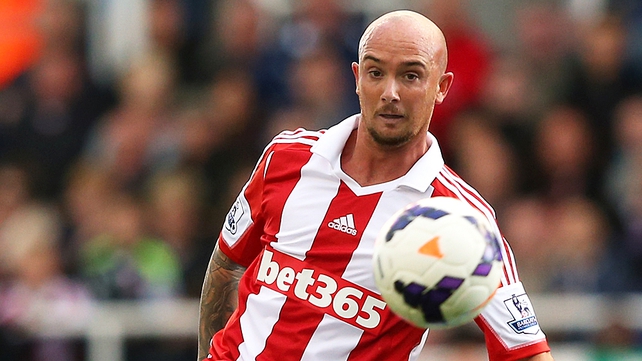
It will be interesting to see the first starting XI named by the new management team, however of much more importance will be the teams named early next year. As mentioned above, Noel King picked this squad. O'Neill and Keane have yet to put their stamp on it. If Keane has his say, for example, could we possibly see a return to the Ireland fold for Stephen Ireland? Keane has spoken about his admiration for his fellow Corkman during Ireland's international exile, and there have been constant murmurings from the Stoke City midfielder to the tune that he may welcome a return to the green jersey under new management. It shouldn't be up to a player whether he plays for his international side or not, but if O'Neill and Keane deem his form good enough, Ireland could be a useful addition to the squad.
This managerial partnership has the potential to either end in tears or establish a solid platform for the Irish international side for years to come. Odds have been slashed already on Ireland's qualification for the next European championships, with the draw for the qualifiers not set to take place until the 23rd of February next year. Whatever happens on the field, Ireland games won't be dull again for quite a while.

Rep. of Ireland squad for forthcoming friendlies vs Latvia and Poland:
David Forde (Millwall), Keiren Westwood (Sunderland), Rob Elliot (Newcastle), Sean St Ledger (Leicester City), Marc Wilson (Stoke City), Seamus Coleman (Everton), John O’Shea (Sunderland), Alex Pearce (Reading), Stephen Kelly (Reading), Joey O’Brien (West Ham), Ciaran Clark (Aston Villa), Stephen Ward (Brighton & Hove Albion), James McCarthy (Wigan Athletic), Glenn Whelan (Stoke City), Paul Green (Leeds Utd), Andy Reid (Nottingham Forest), Aiden McGeady (Spartak Moscow), Anthony Pilkington (Norwich City), James McClean (Wigan), Robbie Brady (Hull City), Stephen Quinn (Hull City), Wes Hoolahan (Norwich City), Shane Long (West Bromwich Albion), Robbie Keane (LA Galaxy), Jon Walters (Stoke City), Kevin Doyle (Wolves), Anthony Stokes (Celtic).


Monday, 30 September 2013

In From The Cold: King recalls Reid, Gibson and Stokes for October qualifiers

Reid to make his international comeback.


Ireland's caretaker manager Noel King today announced his provisional 26 man squad for the upcoming qualifiers against Germany and Kazakhstan.
While there are no real changes to the defensive personnel, there is a reshuffle in the centre of the park which sees Darren Gibson return to the fold after a self-imposed exile. Nottingham Forest midfielder Andy Reid gets a call up after being left out in the cold by Trappatoni for the past 5 years. 
Reid is a player of undoubted ability, with a left foot capable of picking the lock of any defence. There have always been question marks over his fitness, however his lack of pace is compensated by his passing, shooting and free-taking ability. Below is a short clip highlighting what he's capable of. The only pity for Ireland is that Reid, along with Wes Hoolahan, were overlooked by Trappatoni during a period when Ireland were crying out for a creative presence in midfield. Now the two of them are the wrong side of thirty years old, Hoolahan only finding his way into Trappatoni's plans earlier this year and Reid parachuted in for two World Cup qualifiers rendered almost meaningless by recent results. 
Darron Gibson took himself out of contention for an Ireland call-up following last year's disappointing European Championship. The decision of Trappatoni not to play him in any of Ireland's three games was something that rankled, leading him to opt out of playing any more games under the veteran Italian manager. He declared his availability once more when Trappatoni parted ways with the Ireland team and will be a welcome addition to the midfield. 
A return on the cards?
Interestingly, Stephen Ireland is a name that we could be seeing again on the team-sheet. Irish Independent football writer Daniel McDonnell tweeted today "A comeback for Stephen Ireland was discussed. He doesn't feel in top condition/ready but gave impression he wants to play for Ireland again." Whether he would be welcomed back by Irish fans is another matter entirely, but there is a precedent for a controversial Corkman returning to the fold.
Up front, Anthony Stokes is called up to the international set-up for the first time since he withdrew from the Carling Cup squad in May 2011. As the only player of the Irish panel currently involved in Champions League football, his inclusion at the expense of Connor Sammon is a welcome one.
Kevin Doyle has also been given a reprieve by Noel King, having missed out on the past few international fixtures. However the Wexford man had not been overlooked by Trappatoni due to some slight, (perceived or otherwise) but rather because of an abysmal run of form. Doyle now plies his trade with Wolverhampton Wanderers in League One and will surely be desperate to get on the field in a green shirt, if only to put himself in the shop window for a January escape. At 30 years old, time is running out for the former Reading striker.
Doyle back in the squad.
Elsewhere in the squad, Richard Dunne and John O'Shea are included despite both being suspended for the Germany game. They will join up with the rest of the team before the Kazakhstan fixture. Darren O'Dea has been omitted from the squad but Noel King is confident he has the strength in depth needed to cope at the back. While Andy Reid returns to the fold, his club-mate Simon Cox misses out.
Provisional 26 man squad:
Forde [Millwall], Westwood [Sunderland], Randolph [Birmingham], O'Brien [West Ham], St Ledger [Leicester], Wilson [Stoke], Coleman [Everton], Kelly [Reading], Clark [Aston Villa], McShane [Hull], Gibson [Everton], Whelan [Stoke], McCarthy [Everton], Green [Leeds], Reid [Nottingham Forest], McGeady [Spartak Moscow], Pilkington [Norwich], McClean [Wigan], Brady [Hull], Quinn [Hull], Hoolahan [Norwich], Long [WBA],Keane [LA Galaxy], Walters [Stoke], Doyle [Wolves], Stokes [Celtic] – O'Shea [Sunderland] and Dunne [QPR] will join squad for Kazakhstan game.

Thursday, 12 September 2013

A Crucial Season Ahead For Irish Rugby

Schmidt's first season in charge (Pic: irishrugby.ie)
When it comes to Irish rugby all seasons are important, some are more important than others, and this is more important than most.
New Irish head coach Joe Schmidt will be looking to put his stamp on his team in the forthcoming November series. His Leinster sides played some outstanding attacking rugby which  the national side often lacked under Declan Kidney. The players are certainly there for Schmidt to usher Ireland into an exciting new era, with the likes of Madigan, Zebo and Gilroy providing stern competition for the elder statesmen of the national set-up.
The November series will be a baptism of fire for Schmidt however, with a game against Samoa followed by clashes with Australia and his native New Zealand. Ireland had the upper hand the last time they met the Wallabies back at the world cup 2 years ago, but while Australia lost the Lions series and made a poor start to this year's Rugby Championship, they have an enviable list of attacking talent at their disposal.
Enviable to all except perhaps the World Cup holders themselves. The less said about Ireland's last clash with the New Zealand the better, however Schmidt will hope that his charges can at the very least acquit themselves well when the All Blacks come to town on November 24th.
Brace yourselves... They're coming.

Then comes next year's Six Nations and the opportunity and necessity of consigning this year's poor performances in the competition to history. Finishing in 5th place, below both Italy and Scotland is not something that Schmidt would countenance in his first season in charge. However the fact that both those sides finished ahead of Declan Kidney's charges last spring highlights the fact there is no such thing as an easy game in the Six Nations. Schmidt's squad must hit the ground running in their first two games (at home to Scotland and Wales) if they are to avoid a similarly underwhelming campaign.
If the national side is facing a year of transition, it perhaps pales in comparison to the changes at provincial level. Former Blues coach Pat Lam is challenged with taking Connacht forward following Eric Elwood's resignation. The western province have enjoyed some great Heineken Cup nights in the Sportsgrounds on Elwood's watch, and Lam's task will be to ensure better showings in the bread and butter competition that is the Rabo Pro 12. Last year they finished a disappointing eighth, 12 points behind Treviso. Losing the influential Mike McCarthy to Leinster is a setback they must quickly overcome.
Connacht Head Coach Pat Lam

Looking eastwards, Leinster have to adjust to their own changes in personnel. With Schmidt leaving the set-up to take charge of the national side, it's former Leicester Tigers head honcho Matt O'Connor who picks up the mantle. The Australian had a good record with the Tigers in the Premiership, guiding them to back to back titles. However he now faces the task of further filling the Leinster trophy cabinet. Without Jonny Sexton and with Brian O'Driscoll entering the final year of a glittering career. If Leinster are to hold on to other key players then O'Connor must hope the IRFU figure out a way to compete with the vast amounts of money on offer from French clubs.  Lions tourists Sean O'Brien and Jamie Heaslip are the latest figures to be linked with a move away, with Clermont Auvergne reportedly interested in poaching the  back-rows once their contracts end next June.
Gone. Going? Going. (Pic: irishrugby.ie)

They knew the day was coming in Munster but it still hurt to say goodbye when Ronan O'Gara departed for Paris and a coaching role at Racing Metro. While the return of Paul O'Connell to full fitness after a frustratingly long spell on the sidelines last season will be a welcome boost, the question facing Rob Penney's side is where the next group of leaders will come from. Peter O'Mahony has been given a vote of confidence in that regard, with the back-row taking over the captaincy for the season. However with O'Gara gone and Doug Howlett too, the issue is who will emerge as a leader in the back-line. It's a big year for Ian Keatley and JJ Hanrahan as they battle it out to become O'Gara's undisputed successor.
Ulster are perhaps the most settled of the Irish provinces, with coach Mark Anscombe in the job a year at this stage and little movement in or out during the summer. However even the most stable of Irish provinces will be thrown into chaos in the coming weeks. It appears that as of next season the Heineken Cup will cease to exist.
English and French clubs have both released statements in the past few days indicating an unwillingness to continue competing in the Heineken Cups in its current format. The present agreement for Europe's premier competition ends after next year's final. The French and English propose the establishment of a new 20 team tournament where qualification is gained solely on merit. They have stated that this new tournament will include teams from both countries but will also welcome sides from the other nations.
At present each country's union has discretion in how to award the 24 allotted Heineken Cup places. France and England have six slots each, Ireland and Wales three and the Scots and Italy taking up the rear with two apiece. The winners of the competition and the Amlin Cup are also allocated a place in the top competition the following season.
Is the Heineken Cup coming to an end? 

These regulations have allowed Ireland to send all four provinces into Heineken Cup battle in the past two seasons  and again this season, as Leinster's two Heineken Cup successes and their Amlin win back in May this year have allowed Connacht to dine at the top table. Undoubtedly this has been fantastic for Irish rugby as a whole and anything that will alter the current arrangement should be treated with caution.

The ERC have countered the statements of the English and French clubs by reiterating that they must approve any European competitions, and stating that all parties are working towards a deal to extend the agreement that ends in May next year. However if the Anglo-French demands are not met and the Heineken Cup ceases to exist, it is imperative that the IRFU choose their side carefully. The provinces cannot survive on the Rabo Pro 12 alone, and anything that hurts them hurts the national team too. 

Tuesday, 18 December 2012

Like We Never Left (First Published in The Irish Times 18th Dec 2012)

On the 28th of December, a group of young Irish will meet in a Limerick bar a stone's throw from the University from which they graduated in August 2011.
 This will be no chance encounter. A Facebook invite has taken the place of the Star of Bethlehem in this modern Christmas tale. We'll come from near and far. Dublin and Edinburgh, London and Korea, even Clare.
 It will be more than a meeting of old friends, however. It will be one in the eye of the recession that for 364 days of the year keeps us apart.
In small groups we'll arrive, seeking familiar faces in the crowded bar. The joy of reunion will be displayed in all its forms. Tears, laughter, hugs and pats on the back. We're home.
 The warm glow felt after the first few pints will prompt the storytelling. Ten stories will be told at once, many which have already been told via Skype or Facebook, all of which mean more when told face-to-face.
At no point during the night will we forget friends half the world away. Friends who are spending their Christmas in the Far East, on Australian beaches, in Canadian cities. Our sorrow at their absence will ensure we are as aware of them as we would be were they there with us.
I'll sit there smiling among my friends and inwardly I'll wonder. What does 2013 have in store? Will I spend next Christmas half a world away from the homestead, or will I be one of the lucky ones in gainful employment within the confines of these shores?
I'll shrug away these questions as I shrug on my jacket. There is a far more pressing matter at hand. Which bar next?
The night will hurtle toward its inevitable conclusion, and as closing time approaches it will be as though the last 16 months never happened. None of us have joined the rat race, the dole queue, or the masses leaving this country in search of a better life.

Morning will bring with it cold reality and hot tea. Friends will slip away from the hotel one by one. No goodbyes.. There is more promise in "see you later." We can't predict how 2013 will pan out, but we'll content ourselves with the knowledge that we've ended 2012 in good company.

Tuesday, 23 October 2012

A Nou Perspective on Celtic after heroic failure

Plenty to ponder for Neil Lennon after tonight's game

When the final whistle blew in the outer reaches of Barcelona tonight, Messi et al could be forgiven for looking surprised.
Not because they had eked out a late victory over Celtic, they've won enough games at the death for that to be a non-issue. But if they were expecting a clamour for their jerseys from Neil Lennon's charges they were sorely mistaken.
It's not as if there won't be another opportunity for the sides to swap shirts, they meet again in a fortnight's time when Celtic entertain the Catalans at Celtic Park. But you get the feeling that the Scottish champions have decided they aren't in awe of their illustrious opponents anymore.
You hear it all the time. Visiting teams taking tours of the Camp Nou, starstruck players striking deals with the marquee players to secure their jerseys when the formalities of football are finished.
Not so Celtic, as this current crop of players are built in the mould of their manager. Neil Lennon never feared Barcelona as a player, and in the build-up to this game he was instilling that mindframe in his players.
Lennon looks upon these consecutive games as an opportunity for points on the board, or at least points proven. 
For almost 94 minutes tonight it looked like both ambitions would be realised. Unfortunately, "almost" is the key word. Jordi Alba crept in at the back post to send Celtic home empty handed. The left-back cost Barcelona €15m during the summer. Neil Lennon's squad is likely to have cost less.
But what value can you place on heart? In truth, nothing, unless you add tactical nous and a bit of luck. Celtic's ploy of playing the full-backs close to the two centre halves prevented Barcelona's attackers from darting inside on one of those all-too-familiar and utterly devastating runs.
Granted, luck played a part in keeping Celtic in the game until the final foray forward by Tito Vilanova's side. Minutes earlier, sub David Villa had struck the base of Fraser Forster's post. The big keeper too had a major part in keeping his side in the game, saving twice from Messi in the second half. 
A momentary lapse by James Forrest in the last 15 seconds was all that cost Celtic an historic point. To blame the youngster for the defeat would be unfair however. Countless experienced defenders can empathise with the winger this evening.
A glum journey home to Glasgow then, but Lennon and his side can take heart in their overall defensive performance. Along with the victory against Spartak Moscow a few weeks back, this game may go some way towards convincing the footballing world to sit up and take note of Celtic. A 2-1 defeat to Barcelona on their own turf is nothing to be ashamed of. Xavi and his feted teammates will find an atmosphere like no other when they arrive on the outskirts of Glasgow in two weeks time. Celtic Park will be rocking. No bookie will be brave enough have Celtic at 45-1 to win this time around.

Saturday, 16 June 2012

Irish fans deserve better

Robbie Keane applauds the best fans in the world ©INPHO/Donall Farmer   

Let's face it. Roy Keane doesn't make life easy for himself. He says he's over Saipan, then harks back to it. He sneers at punditry, then makes a nice little arse groove for himself in the studio chairs at ITV. Everytime he opens his mouth, quills are sharpened and broadcasters clear their throats.

But the ex-Ireland captain should not be criticised for what he said following Ireland's drubbing by Spain last Thursday night. Keane gave a withering assessment of the Irish performance, and said that these tournaments should not just be a sing song for fans.

This was immediately taken as "Keane takes a pop at fans".

He didn't. He just thinks they deserve better. And he's right.

There is no doubt that Irish fans are the best in the world. Our sporting teams are never under-represented in the terraces, no matter where on the globe they might be playing.

This morning (Irish time) in Christchurch Ireland came within a whisker of a momentous result against the All Blacks. For the majority of the game, Irish voices rang loudest around the 21000 seater AMI Stadium.
When captain Brian O'Driscoll muttered dejectedly through the post match on-field interview, Ireland fans cheered their approval of Ireland's performance.

Plucky, but ultimately (as O'Driscoll pointed out) ending in failure.

Fans cheering as Ireland lose. Twice in less than 48 hours have our flagship teams lost to World Champions. Twice Irish fans back their team despite the bitter taste of defeat.

Celebrating failure.

This is not the fault of the fans. If anything it shows the supreme dedication of those who follow Irish sport. We demand heart from our teams, and anything else is a bonus.

But why should we be content with heart? Keane is right. The fans deserve more than a singsong and the honorary title of the best supporters in the world. The main reason they are being dubbed that in the first place is because the international media can't understand just why the fans aren't booing the soccer team.

Houghton 1988. O'Leary 1990. McGrath 1994. Robbie Keane 2002. All great memories. The abiding memory from Ireland's Euro 2012 campaign? A fan sucking on a Croatian tit.

Irish fans have flocked in their droves to Poland to support the Boys In Green. Many will spend years paying off the loans they took out to get them there. And the team have given them nothing in return. The stalwarts of the team have made mistakes that they never make with the Irish shirt on their back. In two excruciating games they have given away horrendous goals just after the first and second halves have gotten under way. Lapses of concentration have let them down in a way that all the heart and desire in the world could not rectify.

Ireland's fans sang the Fields of Athenry as their Euro 2012 dreams unravelled before them. Faultless support, and Roy Keane's message was that they deserved more. The Italy game has now been reduced to a chance to restore some pride in the jersey.

We are a small nation. The high level of interest in sport sometimes ironically causes us problems as oour small population is divided between soccer, rugby and GAA. No one sport gets unrivalled attention in the way that rugby does in New Zealand or football in Spain. But that doesn't mean we haven't put it up to the biggest teams in the world on occasion. We should always strive for excellence, and not be content to sing in the pouring rain as another defeated Ireland team trudges off the field.

Here's the crux of the matter. Irish teams know that no matter how they perform, the fans will stick by them. This is particularly the case with the football team, as the rugby team is at a level where they are expected to be competitive on the big stage.

If fans were more demanding, would it help to change the mentality that we are just in major tournaments for the singsong? Maybe.

Murray Kinsella wrote today about Ireland having the players in rugby to compete with the world's best, and  that perhaps that's not the case in football. He's right. We don't have nearly enough quality to cope with the likes of Spain. But neither did Greece in 2004. Neither did Switzerland in 2010 when they beat Spain in the World Cup.

Ireland need to be more than just cannon fodder for nations in big tournaments. They need to be in big tournaments more often. And they need to shed that "happy to be here" mentality that leads to every other country in the world running stories about plucky Paddies having the craic. There is no greater insult to our sporting pride than those stories.

Brian O'Driscoll and co will be absolutely gutted after the narrow loss this morning. It will be hard to pick themselves up after a performance of such high standards led to nothing but another defeat against the All Blacks.

But we expect them to pick themselves up. We expect them to give a good account of themselves and push New Zealand all the way next Saturday. We expect all this because this is a generation of Irish players that has given us so much, and proved that they can beat anyone on their day. Our expectations are high, and Kidney's men deliver.

There's a line from a Kanye West song; "Reach for the sky, if you fall you land on the clouds." Aim high. Do not be content on getting to a tournament. Go out to win the damn thing.

 Expectation breeds success which in turn breeds expectation.

It's a vicious circle, but it's gold-tinted. Ask the All Blacks, ask the Spanish footballers. They are expected to perform every time they take to a pitch. The pressure is immense. But so is their record.

No team should ever be slaughtered for playing with heart and coming up short. But criticism - like Roy Keane's - of poor performances should not be criticised. The fans deserve better than having to dine out on nostalgia.